
Why California Auto Insurance Rates Are Skyrocketing in 2026
By Danny
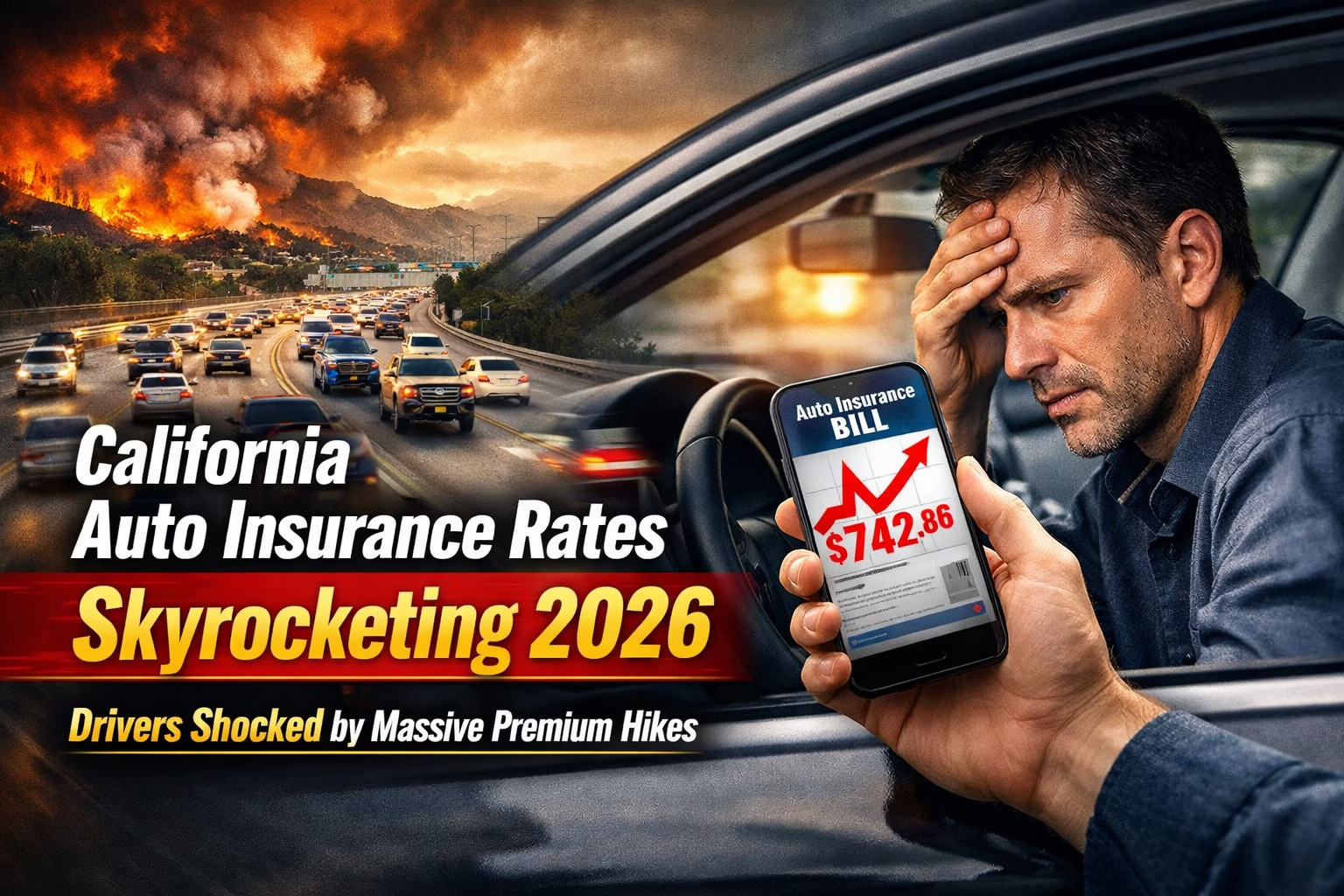
Why California auto insurance rates are skyrocketing 2026: Auto insurance premiums in California have risen sharply over the past few years, and in 2026 many drivers are feeling the pressure more than ever. If you’ve recently renewed your policy and noticed a surprising increase, you are not alone.
As someone who closely follows insurance market trends and consumer protection policies, I’ve seen how multiple economic and environmental factors are converging to create one of the toughest auto insurance markets California has experienced in decades.
In this detailed guide, we’ll break down exactly why California auto insurance rates are skyrocketing in 2026, what is driving the increases, and what drivers can realistically do to manage costs.
The Current Situation in California, Why California auto insurance rates are skyrocketing 2026
California drivers are seeing premium increases ranging from 15% to 40% in some regions. Several major insurers have requested rate hikes, reduced coverage offerings, or tightened underwriting standards.
But this isn’t due to just one reason. It’s the result of five major factors working together.
1. Rising Repair Costs and Inflation
One of the biggest drivers behind rate increases is simple economics.
Why repairs are more expensive in 2026:
- Advanced vehicle technology (sensors, cameras, ADAS systems)
- Higher labor costs
- Supply chain disruptions
- Increased cost of auto parts
- Electric vehicle battery repairs
Modern cars are no longer mechanical machines alone. A minor fender bender can damage:
- Parking sensors
- Backup cameras
- Radar systems
- Lane departure systems
Even a small accident can cost thousands more than it did five years ago.
Insurance companies adjust premiums to reflect these higher claim payouts.
2. Increase in Severe Accidents
California has seen an increase in:
- Distracted driving accidents
- High-speed collisions
- Fatal crash rates
- Urban congestion-related accidents
With more vehicles on the road and higher traffic density in cities like Los Angeles and San Francisco, claim frequency has increased.
More claims = higher payouts = higher premiums.
3. Climate Risk and Wildfire Impact
California’s wildfire seasons are becoming longer and more destructive.
When wildfires occur, they can:
- Destroy vehicles
- Cause smoke damage
- Lead to mass claims
- Increase total loss payouts
Even if you don’t live directly in a wildfire zone, insurers spread risk across regions. This means drivers statewide may see rate increases.
Climate-related risk modeling has become stricter in 2026, and insurers are pricing policies accordingly.
4. Insurance Company Financial Losses
Over the past few years, some insurers reported underwriting losses in California due to:
- High claim severity
- Regulatory rate approval delays
- Unexpected catastrophe claims
When insurers lose money in a market, they either:
- Raise rates
- Reduce coverage
- Stop writing new policies
Some companies have limited new policy issuance in certain California ZIP codes.
This reduced competition can also push prices upward.
5. Electric Vehicle Growth
California leads the nation in electric vehicle adoption.
While EVs are environmentally friendly, they are expensive to insure because:
- Battery replacements are costly
- Specialized technicians are required
- Parts availability is limited
- Repair times are longer
EV-related claims often cost significantly more than traditional vehicles, impacting overall market rates.
6. Legal and Regulatory Factors
California has strict insurance regulations designed to protect consumers. However, rate approvals can take time.
When insurers are unable to adjust rates gradually due to regulatory processes, increases may appear more sudden once approved.
Additionally:
- Litigation costs have risen
- Personal injury claim settlements are higher
- Legal defense expenses continue increasing
These costs are reflected in premiums.
7. Uninsured and Underinsured Drivers
California still has a significant number of uninsured drivers.
When accidents occur involving uninsured motorists, insurance companies may pay out under:
- Uninsured motorist coverage
- Underinsured motorist coverage
These costs are distributed across insured drivers.
Breakdown: What’s Impacting Your Premium the Most?, Why California auto insurance rates are skyrocketing 2026
| Factor | Impact Level in 2026 | Why It Matters |
|---|---|---|
| Repair Costs | Very High | Advanced car technology increases claim cost |
| Wildfires | High | Mass vehicle losses raise total payouts |
| EV Growth | Moderate to High | Expensive parts and labor |
| Accident Frequency | High | More claims filed |
| Legal Costs | Moderate | Higher settlement values |
Are These Rate Increases Temporary?
Some factors may stabilize:
- Supply chain recovery
- Inflation cooling
- Competitive market adjustments
However, long-term structural factors like climate risk and advanced vehicle technology are likely to continue influencing premiums.
This suggests that while increases may slow, rates may not return to pre-2020 levels.
What California Drivers Can Do in 2026
Even in a rising market, there are ways to manage costs responsibly.
1. Shop Around
Different insurers evaluate risk differently. Comparing at least 3–5 quotes can lead to meaningful savings.
2. Increase Deductible
A higher deductible usually lowers monthly premiums — but only choose an amount you can afford in emergencies.
3. Bundle Policies
Combining auto and home insurance often provides discounts.
4. Maintain Good Driving Record
Safe driving remains one of the strongest factors influencing premiums.
5. Consider Usage-Based Insurance
Some insurers offer telematics programs where safe driving habits reduce premiums.
Is California the Most Expensive State for Auto Insurance?
California is among the higher-cost states, but not always the most expensive.
Premium costs vary by:
- ZIP code
- Driving history
- Vehicle type
- Credit-based insurance score (where permitted)
- Coverage limits
Urban drivers typically pay more than rural drivers due to claim frequency.
The Bigger Picture: A Market Adjustment
The surge in rates is not random. It reflects:
- Economic reality
- Climate challenges
- Technological evolution
- Regulatory balancing
Insurance pricing is fundamentally based on risk. When risk increases, premiums follow.
Final Thoughts
California auto insurance rates are skyrocketing in 2026 due to a combination of:
- Inflation-driven repair costs
- Wildfire risk
- EV adoption
- Higher accident severity
- Legal expenses
- Insurer financial adjustments
While rate increases are frustrating, understanding the reasons helps drivers make smarter decisions.
The key is not to panic — but to review coverage carefully, compare options, and optimize your policy.
Auto insurance remains essential financial protection. With informed decisions, you can navigate rising costs without sacrificing coverage.
